• Skip to content
  • Skip to primary sidebar

Header Right

  • Home
  • About
  • Contact

Admin

Mentoring the Next Generation to Take Over the Family Business

May 18, 2022 by Admin

Three Businesspeople Having Meeting In Outdoor RestaurantMany owners of small businesses would love to see a family member take over their business. If you have children, grandchildren, nieces, or nephews that you think might be interested in running the business in the future, you can help lay the groundwork for that potential transfer of ownership in several ways. Use the following strategies and tips to encourage the next generation to become part of the family business.

See Who Is Interested

One or more of your children may already have shown some interest in the family business and asked about its operations. It’s important to encourage that interest. Talk about the company’s history and your vision for its future. Share the excitement you experience as a business owner.

Over time, you can teach an interested child more about the business’s operations. Consider putting the child to work doing various tasks around the business on weekends and over school holidays.

Education Is Key

Over the years, the child’s interest in the business may wane or it may become more intense. If the child (or children) continue to express an interest in working for the family business, you might want to bring up future education plans. You can suggest that the child should consider obtaining a degree that would be beneficial in running all or part of the family business. For example, a degree in engineering could be a huge asset if the family business is involved in property development, construction, or design/build. A degree in accounting or finance can be helpful for businesses of all types. In addition, a degree in a related field would give your family member credibility when it comes to interacting with clients, bankers, and employees.

Insist on Outside Experience

Promoting a family member to a leadership position within the family business when that person has little experience can be a recipe for trouble. It can cause discord among employees, especially those who have worked hard with the expectation that they could move up in the ranks. Additionally, it can undermine the family member’s credibility in the eyes of clients and other business owners.

It often makes more sense and can be hugely helpful to have the family member obtain a post-college job outside the family business. Working in a different company in a similar industry to yours can give your family member a level of experience, confidence, and credibility that would not be obtainable by simply transitioning to the family firm. The skill set established through working elsewhere may help propel your family business in a new, more growth-oriented direction. Family business experts suggest that a child expected to take the reins of a family business should spend at least five years working elsewhere before joining the family firm.

When Multiple Children Are Involved

What happens when more than one family member is interested in becoming part of the business? Encourage them to follow the areas of the business that interest them most. With the appropriate education and experience working for other firms, they may be ready to run their own areas of the business when they rejoin the family firm. This is when their talents can develop and shine.

Bring in Outside Experts

The input of outside professionals who are skilled in different business areas, such as operations, finance, manufacturing, logistics, or marketing can be invaluable to the upcoming generation of family members joining the business. Mentors can guide and serve as a sounding board for the ideas of the child or children working for the family business.

Consider Staying on as an Advisor

You could consider making yourself available as an advisor to the incoming new generation of family members. Whether the arrangement is formal or informal, it should not be open-ended. Determine how long you will offer your services. The goal is to ensure that the new generation of leaders in the family business will be able to run the business independently.

Successfully transitioning a family business to the next generation takes time and planning. For planning assistance, consult an experienced financial professional.

Filed Under: Best Business Practices

4 Tips on How Small Businesses Can Reduce Taxes

April 11, 2022 by Admin

Tax wording on wooden cubes with US dollar coins and bag.As a small business owner, tax liability is the money you owe the government when your business generates income. With changing laws and gray areas regarding deductions, exemptions, and credits, it’s no wonder small business owners rank taxes at the top of the list of the most stress-inducing aspect of business ownership. To reduce that stress, taxes shouldn’t be something to focus on only at year’s end. Use these tips on reducing your business tax year-round and see your taxes and stress level decrease!

1. Business structure

Your company’s business structure is how it is organized – it answers questions like who is in charge, how are profits distributed, and who is responsible for business debt. The most common business structures are:

  • Sole proprietorships have one owner who takes all profits as personal income. The owner is personally liable for any business debts.
  • Partnerships are structured like sole proprietorships but can have an unlimited number of owners.
  • C corporations have unlimited shareholders who each own part of the company. Profits are distributed as dividends between them. Owners are not personally liable for business debts.
  • S corporations are structured like C corporations, but the number of shareholders is capped at 100.

In addition to affecting how a business operates, business structure impacts how much a company pays in taxes. The U.S. tax code is complex and includes four main tax categories:

  • Income tax – paid on profits
  • Employment tax – employee Social Security and Medicare contributions
  • Self-employment tax – Social Security and Medicare contributions for self-employed individuals
  • Excise tax – special taxes for specific goods and services like tobacco, alcohol, etc.

IA sole proprietorship or partnership is a good idea for businesses wanting tax simplicity. For those with less than 100 owners, an S corporation might be the right fit and best tax option. Again, business structure and tax laws are complex and are best determined by a qualified, experienced accountant.

2. Net Earnings

Net earnings (i.e., net income or profit) is the gross business income minus business expenses. Regardless of the business, it begins with gross income (the income received directly by an individual, before any withholding, deductions, or taxes), and allowable expenses are deducted to arrive at net income. How this figure is calculated is dependent upon business structure.

Net earnings are used to calculate business income taxes. Again, the calculation process differs slightly for different business structures. It is best to seek a professional to help with net earnings calculations for the proper calculation and maximum legal deductions.

3. Employ a Family Member

One of the best ways for small business owners to reduce taxes is hiring a family member. The (IRS allows a variety of options for tax sheltering. For example, suppose you hire your child, as a small business owner. In that case, you will pay a lower marginal rate or eliminate the tax on the income paid to your child. Sole proprietorships are not required to pay Social Security and Medicare taxes on a child’s wages. They can also avoid Federal Unemployment Tax Act (FUTA) tax. Consult a trusted accounting professional for details about the benefits of hiring your children or even your spouse.

4. Retirement contributions

Employee retirement plans benefit employees, but they can also be good for your small business. Employer contributions to an employee retirement plan are tax-deductible. They can also carry an employer tax credit for setting up an employee retirement plan. Again, this is a task an accountant can handle for you. They can guide you on retirement plan choices based on your business’s situation, employees, and other factors.

As a small business owner, you can deduct contributions to a tax-qualified retirement account from your income taxes (except for Roth IRAs and Roth 401(k)s). Sole proprietors, members of a partnership, or LLC members can deduct from their personal income contributions to their retirement account.

As with any tax situation, consulting your trusted accounting professional is always best. They are up to date on the latest tax laws, information, and allowable deductions. By being aware of ways your small business can reduce taxes, you can bring these topics up with your accountant, discuss the best options for you, and be prepared long before tax time rolls around.


Contact our tax professionals to learn more about how you can control tax exposure for your small business.

Filed Under: Small Business, Taxes

Do You Have What It Takes to Be an Entrepreneur?

March 20, 2022 by Admin

Do you like being in charge of your destiny and are you able to handle stress well? Do you have a great idea for a new business? You may be able to strike out on your own and become the entrepreneur you want to be. Here are some ideas that may help clarify your thinking and help you decide if you could become a successful entrepreneur.

What’s Your Personality Type?

If you like routine, stress-free days and the predictability of a regular paycheck, and you are not comfortable taking full responsibility for work-related matters, you may not have the traits necessary to become an entrepreneur. Entrepreneurs have to be highly motivated, driven individuals who can handle high levels of stress and lots of unpredictability. They know that the success or failure of their new ventures depends in large part on their own decisions and actions.

What Is Your Idea?

Is your business idea for a new product or service, or does it reimagine or improve an existing one? New ideas often come from listening to other people expressing frustration with how certain things are. For example, the founders of ride-sharing service Uber recognized that the lack of frequent, reliable taxi services was a huge frustration for them and their friends. They worked on finding a solution that was profitable and scalable.

Other entrepreneurs refine and improve existing products — the classic “building a better mousetrap” approach. You may be working in an industry where you recognize room for improvement. You may decide that items you use every day can be made better, cheaper, or with more features. Your big idea may be the one that delivers the most value to consumers while making their lives more pleasant.

Is There a Need?

Once you have decided on your entrepreneurial idea, you have to determine if there is a need for the product or service you hope to market. You can only ascertain the true extent of that need through market research. It does not have to be an expensive or complex undertaking — you could, for example, use social media to reach out to potential customers and gauge their interest. You could offer early access or future discounts to people in return for them filling out a questionnaire about your product or service.

What About Funding?

Can you fund your start-up using your own money? If not, family and friends may agree to be early investors. Crowdfunding sites, angel investors, or venture capitalists might also be other sources of start-up funding. You could also look into local, city, or state government economic development offices to see if they have any programs that offer funding to entrepreneurs like you.

Will You Go It Alone?

Having a co-founder is not always feasible, but certainly desirable for a number of reasons. Having someone at your side who brings the same passion but different skill sets to the business can be invaluable. Additionally, a co-founder can help you critically assess which parts of the business are working and which are not. Essentially, a co-founder can serve as a sounding board for your ideas as to the direction of the business. If it is not possible to have a co-founder, look into bringing trusted advisors, mentors, and other entrepreneurs into your circle.

How Will You Connect to Potential Customers?

Today’s consumers want to feel a connection to the brands they support. By using social media to reach out to your potential customers with a compelling story that humanizes you and the business you founded, you can build loyalty and help your customers feel part of your success. Just be sure that when you use social media to communicate to customers that you are being transparent and authentic. You want your customers to trust you and your business at all times.

Look for Trusted Advice

If you truly believe that you could build a good livelihood for yourself and for others around your ideas, then you should go for it. And you should absolutely consider reaching out to a financial professional for input and advice on the many financial and strategic details involved in running your own business.

Filed Under: Best Business Practices

Small Business Taxes: Who Pays What?

February 16, 2022 by Admin

Business people working on business contract papers at officeThere are various federal taxes that may apply to your small business. The type and form of business you operate determines what taxes you must pay and how you pay them. At the federal level, several different taxes may apply.

Excise Taxes

The IRS defines an excise tax as a tax imposed on the sale of specific goods or services, or on certain uses. Federal excise tax is typically imposed on the sale of items such as tobacco, fuel, alcohol, tires, heavy trucks and highway tractors, and airline tickets. Many excise taxes are placed in trust funds for projects related to the taxed product or service, such as highway or airport improvements.

An excise tax may be imposed at the time of import, sale by the manufacturer, sale by the retailer, or use by the manufacturer or consumer. Some excise taxes are collected by a third party, which then must remit the taxes to the IRS in a timely manner. An example of a third-party collector of an excise tax is a commercial airline, which collects the excise taxes on airline tickets that are paid by airline passengers. Businesses that are subject to federal excise taxes must generally file Form 720, Quarterly Federal Excise Tax Return. Certain excise taxes, such as those owed to the Alcohol and Tobacco Tax and Trade Bureau, are reported on different forms.

Income Taxes

Income taxes must be paid on business profits. How that tax is paid depends on how the business is structured. Most small businesses are pass-through entities, which means that the business’s profits or losses are passed through to the owners and reported on their personal income tax returns.

Partnerships and multi-member limited liability companies (LLCs) generally file a partnership business tax return for informational purposes only. The individual partners and LLC members pay income taxes for their share of the income of the business. Note, however, that some LLCs elect to be treated as a corporation for tax purposes.

An S corporation files an S corporation income tax return for the business. Like a partnership, an S corporation’s net income is divided among the owners, who pay tax on their share of that income individually.

A sole proprietor reports business profit or loss on a separate schedule filed with the sole proprietor’s individual income tax return. Unless an election to be treated as a corporation has been made, the owner of a single-member LLC also reports the company’s profit or loss directly on the owner’s return.

Social Security and Medicare Taxes

Employers must generally withhold Social Security and Medicare taxes from their employees’ wages and must pay a matching amount. Employers must also withhold the 0.9% additional Medicare tax on employee wages and compensation that exceeds a threshold amount.

Self-Employment Taxes

Self-employment tax is a Social Security and Medicare tax primarily for individuals who work for themselves. It is similar to the Social Security and Medicare taxes paid for other workers.

Federal Unemployment Tax

Employers are required to report and pay the Federal Unemployment Tax Act (FUTA) tax separately from federal income taxes and Social Security and Medicare taxes. FUTA tax is not withheld from wages; employers are responsible for paying the tax.

Business owners should exercise extreme care when it comes to paying taxes since any mistakes on their part could result in significant penalties. For assistance, consult a tax professional.

Filed Under: Taxes

Are You Tracking Absolutely All of Your Tax-Related Business Expenses?

January 18, 2022 by Admin

If you’re self-employed, understanding what’s deductible and recording all of your business expenses should be priorities.

When you work for yourself, accurate accounting is critical. The IRS pays special attention to tax returns prepared by sole proprietors. Not only does the agency try to determine whether all taxable income has been recorded, but they also scrutinize business expenses that are claimed, since some taxpayers blur the lines between personal and business purchases.

We’re not suggesting you hold anything back when you’re tracking your tax-deductible business expenses. We want you to claim every penny that the IRS says is permissible. This is especially important if your company makes a lot of money. You’ll need to document everything you can to offset your income and minimize your tax obligation.

How do you ensure that all of the money you’re spending to make money ends up somewhere on your IRS Schedule C? Let’s look at steps you can take.

Review the Schedule C

tax tips

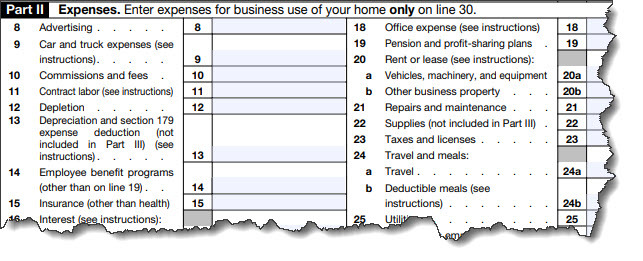
The actual IRS Schedule C form contains broad expense categories. You may need to dig into deeper explanations of them.

If you’ve never completed a Schedule C before, it’s especially important that you familiarize yourself with it. You can view a copy of the 2020 version here. Pay special attention to Part II Expenses. The form breaks down business expenses into specific categories. But what’s the difference between Office expenses and Supplies? What does Other business property mean? Not only do you have to know which expenses are deductible, but you must be sure to include them in the right category.

The IRS has a special publication devoted to discussion of deductible business expenses. You’ll find links to it here. It’s a lengthy document, but there’s an interactive table of contents that lets you jump right to the section you want. You don’t have to read the whole thing, but you might bookmark it so you can consult it when you have a question. There are many questions on the Schedule C that may require additional explanation.

You might want to visit the IRS instructions online. This page displays a detailed outline of the form, section by section and line by line, so you can find what you’re looking for easily and click a link to get there.

Keep Detailed Records

This will be challenging if you’re doing your bookkeeping manually. You’ll need to set up a system of folders or envelopes or whatever works for you and separate receipts by either month or Schedule C category. If you know your way around Excel, you could set up a spreadsheet divided by category and enter receipt information as it comes in. This will make calculations easier, too.

Do make notes on your receipts so you’ll know why you thought the purchases would be deductible. You might also indicate whether the receipt was already entered in your master list, so you don’t have duplicate entries. Don’t forget about credit card charges and checks you’ve written for tax-deductible purchases that didn’t generate a receipt. Enter them in your master list as you go. If you’re ever audited, you’ll need copies of them for documentation. If you get electronic receipts in email, save them in a folder on your computer and record them.

tax tips

You can categorize your tax-related business expenses using personal finance or accounting applications.

There are numerous personal finance and small business accounting applications that allow you to import your online banking transactions and categorize them. These include QuickBooks (online and desktop), Mint, Quicken, and Simplifi by Quicken. Their category lists can often be modified, so you can make sure your tax-related expenses are organized accurately.

Don’t Dismiss the Unusual

There are some legitimate tax deductions that the IRS doesn’t necessarily include in the Schedule C instructions, but which it will accept. For example, H&R Block reported on a case where the cost of cat food was considered a business deduction (a scrapyard was trying to attract wild cats to keep snakes away). A professional bodybuilder was able to claim his purchase of ProTan Muscle Juice Professional Posing Oil as an acceptable business expense.

We’re not recommending that you spend a great deal of time looking for obscure tax deductions. But think about your purchases as you make them to see if they’re tax-worthy.

All of these suggestions may sound time-consuming. They can be, until you get into the habit of tracking all of your tax-related business expenses, but it does require constant diligence. We can help ensure that you’re only claiming legitimate deductions and advise you on those you might question. We can also prepare and file your return for you and/or help with year-round tax planning. Contact us for a consultation.

Filed Under: Taxes

5 Topics Every Business Owner Should Discuss with An Accountant

December 20, 2021 by Admin

MeetingYour accountant or CPA is a business asset that you should put to good use year-round, not just at tax time. There are several topics beyond taxes that business owners should discuss with their trusted financial professionals. In this article, we cover five of them for you. While the new year is traditionally when business owners think of making financial, strategic, and other business-related plans, any time is the right time to speak to your accountant to discuss the following aspects of your business. You can’t begin the conversation too early, but it could be too late in some cases, so don’t put aside these five essential talking points.

1. Financial Planning

Budget is front of mind for business owners, but other financial issues impact your business, too. Consider a full portfolio review with your accountant to plan your financial future. Some critical topics to cover include strategies to improve cash flow, existing business loans, capital investment, charitable contributions, employee-related expenses like bonuses and health care, retirement planning, and asset management.

2. Company Growth

The goal of all businesses is growth. With growth comes change. As your business objectives shift, your valuation and tax liability often shift, too. Any changes you experience in your business should be conveyed to your accountant or CPA so that they can apprise you of liabilities or status changes. For example, suppose you plan to expand, add additional locations, make significant staffing changes, merge companies, acquire new businesses, or plan to sell your business. In that case, you should set up an appointment with your accountant to develop a logical strategy to address the change.

3. Inventory

If your business sells or resells tangible goods, inventory is vital. Sales tax laws and regulations can be challenging. Many states have rules about nexus (i.e., how much presence a business has in a city or state) related to where businesses warehouse inventory and fulfill orders. Your accountant can assess your order process to verify your restocking and ordering processes to maximize cash flow, ensure unsold inventory is accounted for, and ensure that sales tax is collected everywhere your company has nexus.

4. Risk Management

Do you have a plan in place to protect your business from disruption? Many do not. If that applies to your business, contact your accountant to discuss continuity planning to protect your business. They can provide professional insight regarding how to mitigate risks should a disruption occur. Some topics to address are whether your insurance policies are up to date, if all compliance, security, and privacy standards are met, whether your business has fraud protection in place, and if the existing internal controls protect your business. Given the time and capital small business owners invest in their passion, they must take time to manage any potential risk that could destroy what they worked so hard to create and build.

5. Tax Compliance

Lastly, as a business owner, you always want to be tax compliant. And this doesn’t apply only to federal taxes. It is just as essential to make sure state-imposed taxes are addressed on time. Regulations and tax laws change frequently, so it is vital to have a firm grasp on these. The best way to ensure you do this is to have your accountant guide you. They can inform you of any changes that affect your business and advise you on addressing them. Discuss collecting and filing W2s and 1099s for any contract employees; ensure exemption and resale certifications are collected and stored correctly; comply with online sales and nexus rules; and have an internal review to find any issues that might trigger a sale tax audit.


It helps to think of your business accountant as an extension of your team, an impartial adviser who will assess the risks and rewards associated with your business. They will answer your questions and illuminate unclear topics for you. They may bring up important points you’ve yet to consider, so make that call today and get a meeting on the calendar to discuss these critical points with your accountant. And remember, you can do your part by making sure you keep business and personal finances separate and maintaining complete, organized records.

Filed Under: Best Business Practices

  • « Previous Page
  • Page 1
  • …
  • Page 7
  • Page 8
  • Page 9
  • Page 10
  • Page 11
  • …
  • Page 14
  • Next Page »

Primary Sidebar

Search

Archive

  • June 2026
  • May 2026
  • March 2026
  • February 2026
  • January 2026
  • December 2025
  • November 2025
  • October 2025
  • September 2025
  • August 2025
  • July 2025
  • June 2025
  • May 2025
  • April 2025
  • March 2025
  • February 2025
  • January 2025
  • December 2024
  • November 2024
  • October 2024
  • September 2024
  • August 2024
  • July 2024
  • June 2024
  • May 2024
  • April 2024
  • March 2024
  • February 2024
  • January 2024
  • December 2023
  • November 2023
  • October 2023
  • September 2023
  • August 2023
  • July 2023
  • June 2023
  • May 2023
  • April 2023
  • March 2023
  • February 2023
  • January 2023
  • December 2022
  • November 2022
  • October 2022
  • September 2022
  • August 2022
  • July 2022
  • June 2022
  • May 2022
  • April 2022
  • March 2022
  • February 2022
  • January 2022
  • December 2021
  • November 2021
  • October 2021
  • September 2021
  • August 2021
  • July 2021
  • June 2021
  • March 2021
  • February 2021
  • January 2021
  • December 2020
  • November 2020
  • October 2020
  • September 2020
  • August 2020
  • July 2020
  • June 2020
  • May 2020
  • April 2020
  • March 2020
  • February 2020
  • January 2020
  • December 2019
  • November 2019
  • October 2019
  • September 2019
  • August 2019
  • July 2019
  • June 2019
  • February 2019
  • January 2019
  • December 2018

Category

  • Best Business Practices
  • Business Owners
  • Estate and Trusts
  • Financial Advising
  • Individual Tax
  • Investments
  • Payroll
  • Quickbooks
  • Real Estate
  • Retirement
  • Small Business
  • Taxes
  • Uncategorized

Copyright © 2021 · https://www.jwenterprisesllc.com/blog